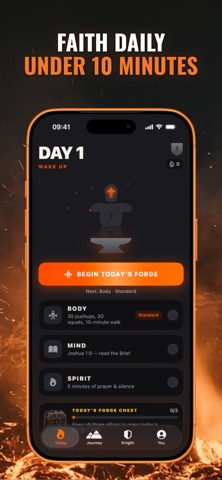
FORGED app preview. The reading paths below are free and separate from the app.
Choose the path that fits
Read the passages in a Bible or translation of your choice. Each question invites you to look at the text in context; none requires an account.
Showing all 20 paths.
READING PATH 01 / 20
Starting the Bible
Begin with a life, not a rulebook.
Read Mark 1:14-20. What invitation does Jesus give, and how do the people respond?
Read Luke 15:11-24. How does the father respond when his son returns?
Read John 20:24-31. What does Thomas ask, and why does John say he wrote?
Take one small step
Read the surrounding paragraphs. Write down one honest question to carry into your next reading.
READING PATH 02 / 20
Learning to pray
A short prayer can be honest without sounding polished.
Read Matthew 6:5-13. What does Jesus emphasize before giving his model prayer?
Read Psalm 13. Notice how complaint, request and trust appear in the same prayer.
Read Philippians 4:4-9. What practices accompany the invitation to pray?
Take one small step
Use your own words: name one concern, one request and one reason for gratitude.
READING PATH 03 / 20
Finding time in a busy day
Make space for attention, not another performance target.
Read Luke 10:38-42. What is Martha doing, and what does Jesus say about Mary?
Read Mark 1:35-39. What happens after Jesus withdraws to pray?
Read Psalm 90:12-17. What does the writer ask God to teach and establish?
Take one small step
Choose a realistic five-minute window tomorrow and put your phone out of reach.
READING PATH 04 / 20
When worries feel loud
Bring fears into the open and take the next practical step.
Read Psalm 13. How does the writer speak honestly about feeling forgotten?
Read Matthew 6:25-34. What examples from daily life does Jesus use to challenge worry?
Read Philippians 4:4-9. What does Paul invite readers to bring to God?
Take one small step
Name one concern, one action within reach and one person you can talk with. Seek appropriate support when needed.
READING PATH 05 / 20
Responding to anger
Slow the reaction enough to choose a constructive response.
Read James 1:19-20. What sequence of listening, speaking and anger does James recommend?
Read Ephesians 4:25-32. What alternatives to destructive speech are named?
Read Proverbs 15:1. How does the proverb contrast different kinds of responses?
Take one small step
Pause before replying. Write a calm opening sentence that describes the issue without an insult.
READING PATH 06 / 20
Thinking through forgiveness
Forgiveness, trust and safety are not identical.
Read Matthew 18:21-35. What contrast does the parable draw between receiving and withholding mercy?
Read Colossians 3:12-15. What qualities sit alongside forgiveness in this passage?
Read Romans 12:17-21. What does Paul say about responding to wrongdoing?
Take one small step
Reflect with a trusted person. If someone is harming you, prioritize safety and appropriate support; forgiveness does not require unsafe contact.
READING PATH 07 / 20
Making a sincere apology
Name your own action before trying to explain it.
Read Psalm 51:1-12. What does the speaker acknowledge and ask for?
Read Luke 19:1-10. What concrete changes does Zacchaeus propose?
Read Matthew 5:23-24. What priority does Jesus give reconciliation in this teaching?
Take one small step
Prepare a specific apology: name your action, acknowledge its impact and ask what repair might be possible without demanding a response.
READING PATH 08 / 20
Faith and work
Look at effort, honesty and the way you treat people.
Read Colossians 3:22-24. What does Paul say about the attitude of work? Consider the historical context and avoid using the text to excuse exploitation.
Read Proverbs 11:1. What does the proverb say about honest measures?
Read Micah 6:6-8. How does justice and mercy relate to outward religious practice?
Take one small step
Pick one practical act of honesty or consideration in your work today.
READING PATH 09 / 20
Encouragement for fathers
Presence can start with a small, repeatable action.
Read Deuteronomy 6:4-9. Where does this passage place conversations about faith in ordinary life?
Read Ephesians 6:1-4. What instruction is given to fathers about their children?
Read James 1:19. How might being quick to listen change a conversation?
Take one small step
Give a child your full attention for a few minutes; ask an open question and listen without rushing to correct.
READING PATH 10 / 20
Serving a spouse
Love is expressed through attention and mutual care.
Read Philippians 2:1-5. What attitudes toward others does Paul encourage?
Read 1 Corinthians 13:4-7. Which descriptions of love challenge you today?
Read Ephesians 4:25-32. What does this passage suggest about truthful and constructive speech?
Take one small step
Ask your spouse what would make this week easier; listen to the answer and agree on one action.
READING PATH 11 / 20
Building stronger friendships
Friendship grows through truthful care and presence.
Read Proverbs 17:17. What does this proverb say about constancy?
Read Mark 2:1-12. What do the friends do to bring their companion to Jesus?
Read Romans 12:9-16. Which instructions describe practical care for other people?
Take one small step
Send a thoughtful check-in to a friend; give them room to respond on their own terms.
READING PATH 12 / 20
Reading through grief
There is room for sorrow, questions and companionship.
Read Psalm 42. How does the writer move between remembering, longing and speaking to himself?
Read John 11:17-36. How does Jesus respond to Martha, Mary and the people grieving?
Read Romans 12:15. What does shared life look like in times of joy and sorrow?
Take one small step
Tell a trusted person what kind of support would help today. If grief feels unmanageable, consider professional support.
READING PATH 13 / 20
Practising gratitude
Notice a real gift without pretending everything is easy.
Read Psalm 103:1-14. Which reasons for praise does the Psalm name?
Read Luke 17:11-19. What does the returning man do and say?
Read 1 Thessalonians 5:16-18. What short practices are named together?
Take one small step
Name three specific things you appreciate; thank one person for something concrete.
READING PATH 14 / 20
Making a difficult decision
Gather wisdom and consider what your choice affects.
Read James 1:5-8. What invitation does James give to someone who lacks wisdom?
Read Proverbs 15:22. What role does counsel play in this proverb?
Read Philippians 2:3-4. Whose interests should you consider alongside your own?
Take one small step
Write two options, one likely consequence of each and one question for a trusted adviser.
READING PATH 15 / 20
Facing a tempting moment
Plan your next choice before the difficult moment arrives.
Read James 1:12-15. How does James describe temptation developing?
Read Matthew 4:1-11. How does Jesus respond at each stage of the account?
Read 1 Corinthians 10:12-13. What warning and encouragement appear together?
Take one small step
Identify a trigger, a safer alternative and someone you can contact. For addiction or immediate danger, seek qualified support.
READING PATH 16 / 20
Learning to rest
Rest is a practice of trust and limits, not a reward for exhaustion.
Read Genesis 2:1-3. How is rest presented at the end of the creation account?
Read Mark 6:30-32. Why does Jesus invite the apostles to a quiet place?
Read Matthew 11:28-30. What invitation does Jesus give to the weary?
Take one small step
Choose one small obligation to postpone and one restorative activity to protect this week.
READING PATH 17 / 20
Finding courage
Courage can mean a faithful next step while fear remains.
Read Joshua 1:1-9. What task is Joshua facing and what instructions accompany the call to courage?
Read Mark 4:35-41. What do the disciples fear during the storm?
Read 2 Timothy 1:6-7. What encouragement does Paul give Timothy?
Take one small step
Name one small step you can take safely and one person who can support you.
READING PATH 18 / 20
Serving someone well
Good service begins by noticing what is actually needed.
Read Mark 10:42-45. How does Jesus contrast service with domination?
Read John 13:1-17. What does Jesus do for his disciples and what example does he set?
Read Galatians 6:2-5. How do these verses speak about helping and personal responsibility?
Take one small step
Offer one specific practical help and respect the person’s answer.
READING PATH 19 / 20
Preparing for church
Arrive curious and take one useful idea into the week.
Read Acts 2:42-47. What practices characterize this early community?
Read Hebrews 10:23-25. How are believers encouraged to support one another?
Read James 1:22-25. What contrast does James draw between hearing and doing?
Take one small step
After the service, write one question and one possible action. You are free to participate at your own pace.
READING PATH 20 / 20
Starting again after a setback
A setback can be a place to reflect and begin again.
Read Luke 15:11-24. What does the son decide and how does his father respond?
Read Lamentations 3:19-26. How do the writer’s memories and hope sit together?
Read Philippians 3:12-14. What does Paul say about pressing forward without claiming to have arrived?
Take one small step
Choose one realistic next step for tomorrow and invite a supportive person to check in.
CONTINUE WITH FORGED
Give your reading a daily rhythm.
FORGED pairs Scripture, a practical challenge and quiet prayer in a 90-day devotional for men. Day 1, Bible Basics and Bible Words are free. Days 2–90 and additional content are optional Premium.
Free download with optional in-app purchases. iPhone and iPad; iOS 18 or later. Honest Little Apps publishes FORGED and this resource. Availability and prices vary.